04/05 — 31/10/2026
Royal Divorce
04/05 — 31/10/2026
Fellowship
Royal Divorce presents Museologically Speaking, an investigation of the museum as a space of regulated behavior, where bodies, gaze, and movement are shaped by invisible yet deeply embedded structures of meaning. Museologically Speaking examines the tensions running through the contemporary museum apparatus, questioning its function as archive, site of knowledge transmission, and performative space.
The research focuses on the analogies between the ethnographic museum and the contemporary art museum, both defined by a shared spatial and symbolic grammar manifested in their relationship with the public, the embodiment of institutional roles, and the construction of itineraries governed by precise behavioral hierarchies. Museologically Speaking seeks to explore the modes of movement control within museum spaces, with particular attention to the guided tour as a performative device, a tool of mediation, and a site for negotiating seemingly unquestioned truths.
Through a practice that intertwines the body and institutional critique, Museologically Speaking investigates how the museum disciplines presence and organizes collective experience, while opening up possibilities for misalignment, ambiguity, and the temporary redefinition of the rules of spectatorship and engagement.
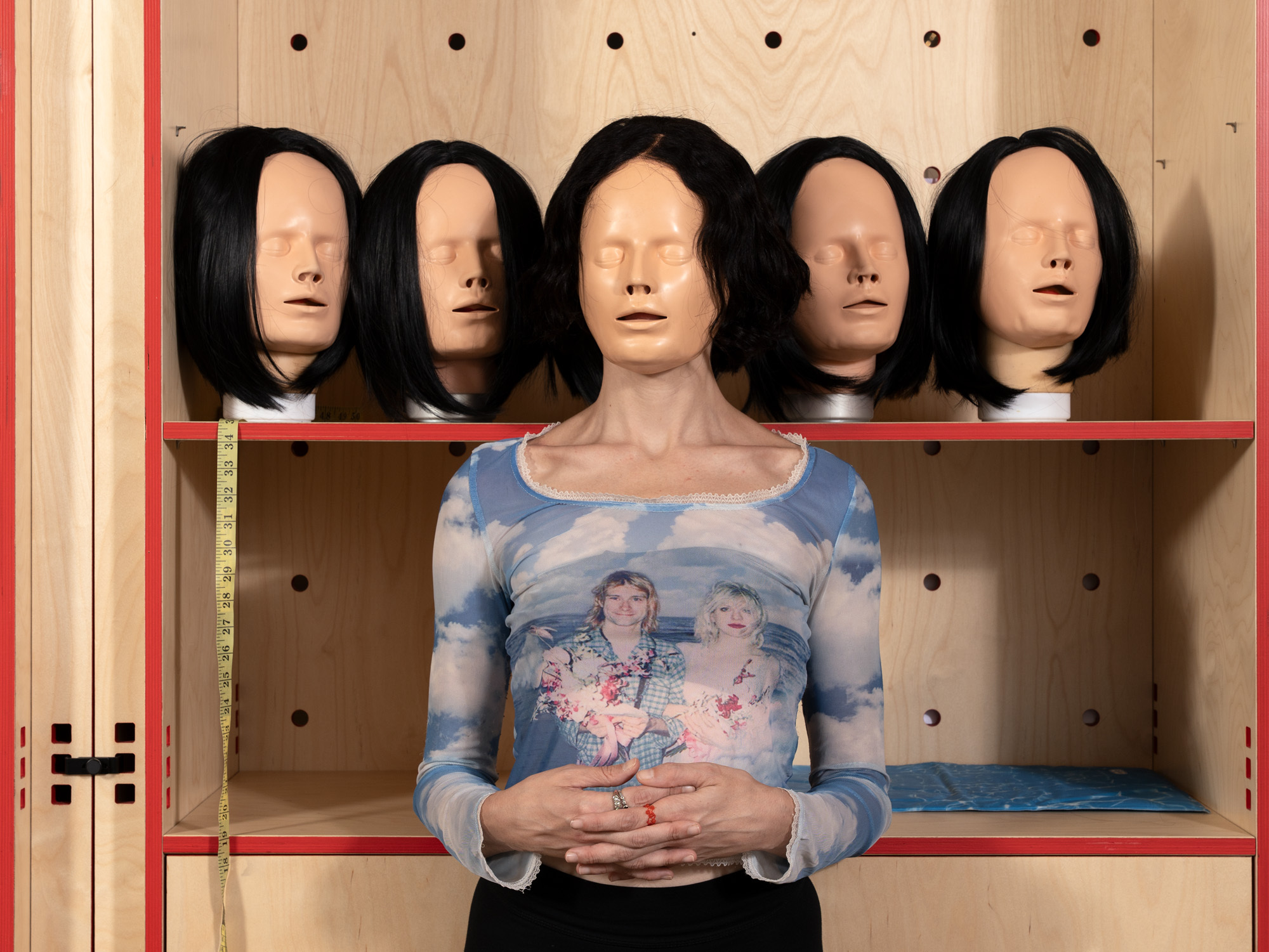
Royal Divorce is a collective founded in 2023 that develops performative and installation-based practices from discarded images, digital archives, and amateur materials sourced from the web. The collective’s research moves within the contemporary crisis of representation, interrogating the relationship between memory, the survival of images, and the construction of the imaginary in the digital age.
Through performances, sound dramaturgies, and installation devices, Royal Divorce explores the hauntological potential of images and their capacity to re-emerge as unsettling presences, suspended between oblivion and reactivation. The collision between historical archives and digital archives generates performative landscapes in which bodies, voices, and visual fragments become tools for investigating the ontological transformations of images and collective memory.
The collective’s practices often develop from marginal or residual materials — online comments, amateur videos, anonymous images, deteriorated sound traces — transformed into spaces of listening, activation, and shared presence. Within this process, the web emerges not only as a hyper-inclusive archive, but as a performative environment capable of producing new forms of narration, relation, and symbolic survival.